
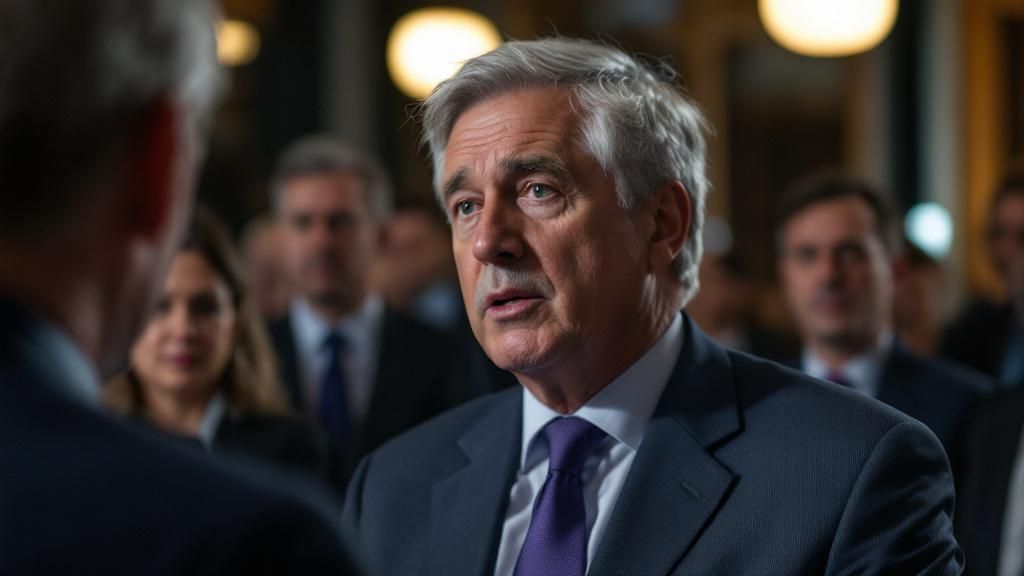
As households across the nation contend with rising energy bills and inflation climbing to unprecedented levels, the Labour leader has initiated a fierce attack on the Prime Minister’s handling to the living costs crisis. In a heated parliamentary confrontation, the Labour party has questioned the administration’s insufficient assistance schemes, demanding greater action to help struggling families. This article explores the intensifying tensions relating to the crisis and explores the contrasting visions for economic assistance.
The Opposition party’s Critique of State Policy
The leader of the opposition has intensified scrutiny of the government’s handling of the worsening affordability crisis, asserting that current measures fall woefully short of addressing the extent of difficulty impacting British families. In parliamentary debate, the opposition has articulated a thorough analysis spanning limited financial aid, insufficient intervention in the energy sector, and a apparent absence of urgency in tackling inflation. The opposition argues that whilst households grapple with record-high bills, the government’s piecemeal approach merely patches symptoms rather than dealing with fundamental causes of economic hardship.
Central to the opposition’s argument is the contention that the government has badly miscalculated both the scale and length of the crisis. Opposition spokespersons have pointed to data showing that vast numbers of families now face genuine hardship, with many obliged to select between keeping warm and feeding themselves. The opposition maintains that the government’s first response did not fully gauge the crisis’s effect, resulting in support mechanisms that turned out to be insufficient when conditions worsened further. This wrong assessment, they argue, reflects systemic weaknesses in economic prediction and policy planning.
Limited Support Systems
The opposition has specifically targeted state assistance programmes as inadequate and misdirected, contending that price regulation frameworks fall short of protecting vulnerable populations adequately. Observers note that whilst the government has implemented multiple support measures, such as grants and council tax rebates, such provisions provide only temporary relief without tackling systemic issues. The opposition contends that means-tested benefits remain excessively narrow, shutting out millions of working families who still face difficulties with mounting expenses. In addition, they argue the government’s approach lacks the determination required to tackle such an extraordinary financial crisis.
Opposition analysis proposes that present welfare systems negatively impact those earning mid-range salaries who miss out on access requirements for targeted assistance. The party has outlined new models involving universal payments, expanded welfare provisions, and state involvement in energy markets to control costs. They highlight that short-term solutions, whilst welcome, cannot substitute for deep-rooted transformation. The opposition maintains that in the absence of significant law changes and increased public investment, households will remain subject to significant economic hardship for years to come.
Long-term Economic Policy Challenges
Beyond urgent crisis response, the opposition has raised fundamental questions regarding the state’s long-term economic direction and competitiveness. Opposition analysts argue that the present method focuses on short-term political optics over long-term economic sustainability, potentially compromising Britain’s long-term prosperity. They contend that without strategic investment in renewable energy infrastructure, manufacturing capacity, and skills development, the nation risks sustained economic decline. The opposition emphasises that tackling cost of living challenges requires extensive reforms targeting productive efficiency, innovation, and sectoral development alongside pressing relief measures.
The opposition has articulated concerns that government policy lacks consistency across different sectors, with energy policy, industrial strategy, and fiscal measures working independently rather than as coordinated elements. Critics argue this piecemeal framework prevents effective addressing of persistent inflation and deep-rooted economic issues. The opposition pushes for a integrated strategic framework encompassing energy transition, manufacturing revival, and skills development. They maintain that real problem-solving demands transformative policy reform rather than gradual modifications to existing frameworks.
Government’s Defence and Counter-arguments
The government has robustly defended its economic policy, arguing that the living cost challenges are largely driven by global factors beyond Westminster’s direct control. Ministers have underscored the extraordinary scale of the energy shortage, stemming from international tensions and worldwide supply chain interruptions. They contend that their targeted support packages, covering the price cap on energy and cost of living payments, represent a balanced and economically prudent approach. The Treasury maintains that profligate expenditure could exacerbate inflation even more, undermining long-term financial stability and ultimately damaging the identical households the opposition claims to champion.
Government officials have highlighted the significant monetary support already deployed, reaching billions of pounds in immediate aid to vulnerable households. They argue that their approaches balance immediate relief with prudent fiscal management, preventing the debt spiral that uncontrolled expenditure could provoke. Ministers also draw attention to their initiatives in strengthening energy independence through sustainable energy projects and market diversification. The government argues that whilst the opposition provides sympathetic language, their suggested policies are economically questionable and would become unaffordable without increasing taxation or greater public borrowing.
Furthermore, government representatives stress their dedication to tackling core economic problems through output gains and business investment incentives. They argue that lasting economic recovery requires structural economic reforms rather than temporary handouts. The administration holds this strategy ultimately delivers increased wealth and protection for all citizens.
